
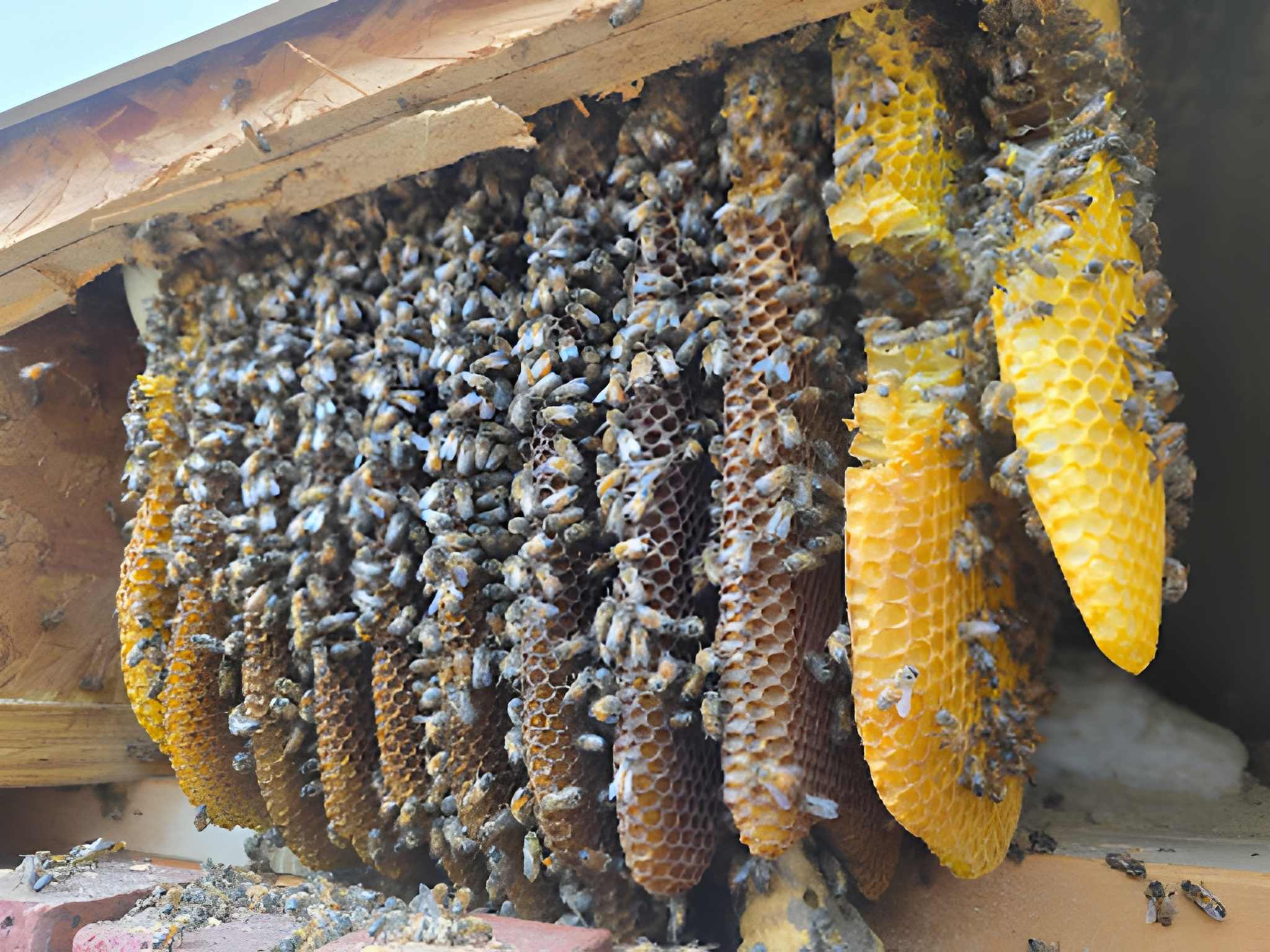
A successful live bee removal requires more than getting bees out of a building. The process must be planned for the colony, its queen, the hive structure, and the conditions that attracted bees to the property. Unlike extermination, humane removal focuses on preserving the honey bee habitat whenever practical and relocating it to an appropriate ecosystem.
In this blog, you learn about how live bee removal in Keller, TX, works and why it beats extermination. Understanding the removal process can help you choose a safer, more responsible solution.
What Is Live Bee Removal?
Live bee removal is a process that captures and relocates honey bees instead of killing the colony with pesticides. A trained professional or registered beekeeper examines the colony, chooses a suitable extraction method, and transfers it to a managed apiary facility when conditions allow.
The approach can involve different techniques depending on where the bees are positioned:
- Bee swarm removal: Collecting a temporary cluster of bees, often hanging from a tree branch, fence, or other outdoor surface.
- Hive cutout: Carefully opening part of a structure to remove the colony, honeycomb, brood, and bees from an enclosed cavity.
- Trap-out: Using a controlled exit and collection setup to encourage bees to leave an established nest and enter a new hive.
- Bee vacuum collection: Using specialized equipment with controlled suction to collect bees while minimizing injury.
Each method requires appropriate equipment and knowledge of honey bee behavior. Mr. Bee Removal evaluates the colony’s location and condition before determining which removal approach is appropriate for properties in Keller, TX.
How Does the Live Bee Removal Process Work?
The process depends on whether bees have formed an outdoor swarm or established a permanent colony inside a structure. An experienced removal professional considers accessibility, colony size, building materials, and potential safety concerns before starting.
1. Inspecting the Colony and Nesting Area
The first step is finding out where bees are arriving, how large the colony may be, and whether they have formed a hive. Bees commonly settle inside wall cavities, soffits, trees, sheds, and other protected areas.
The inspection also helps determine whether the situation involves honey bees or another stinging insect. Africanized honey bees can be quite defensive, and they cannot be reliably distinguished from other honey bees by appearance alone. Professional assessment is important before anyone approaches or disturbs the colony.
2. Selecting a Suitable Extraction Method
Once the nesting location is understood, the specialist chooses a method based on the colony’s position.
An exposed swarm can be collected using a hive box or specialized bee vacuum. An existing colony inside a wall requires a hive cutout to obtain the comb and brood. Some difficult locations may be better suited to a trap-out, although this method can take much longer.
3. Collecting the Bees and Queen
During live extraction, the goal is to preserve as much of the colony as practical. The expert carefully transfers the bees, including the queen when possible, into suitable hive equipment.
A bee vacuum designed for live collection may be used when appropriate. Its controlled suction helps limit physical stress and injury compared with ordinary vacuum devices.
Preserving the queen is especially important because she supports the colony’s continued development. Without a viable queen, the relocated honey bee colony may struggle to establish itself.
4. Relocating the Colony to a Managed Apiary
After collection, the bees are sent to an appropriate managed apiary or another suitable location. A beekeeper can monitor the colony, provide suitable hive conditions, and verify its formation after relocation.
This step allows the rescued bees to continue their natural activities, including pollination and colony development.
5. Cleaning the Hive Area and Closing Entry Points
Removing the visible one does not necessarily eliminate the conditions that attracted them. Established colonies may leave behind honeycomb, wax, honey, brood material, and other residue.
Proper honey and wax cleanup helps reduce lingering odors that could attract other swarms. The removal specialist should also address accessible nesting cavities and recommend sealing entry points after the work is complete.
Mr. Bee Removal considers the condition of the original nesting area as part of the removal process. Addressing leftover hive material and potential entry points helps reduce the likelihood of another colony settling in the same location.
Live Bee Removal vs. Extermination: What Is the Difference?
Both approaches tackle an unwanted bee colony, but their methods and outcomes differ. Extermination uses chemical or other control methods to kill the bees, while natural bee removal aims to protect and relocate them.
| Consideration | Live Bee Removal | Extermination |
| Bee survival | Preserves and relocates bees when practical | Intentionally kills the colony |
| Removal method | Uses collection, extraction, or relocation techniques | Uses pesticides or other eradication methods |
| Hive material | Requires removal of accessible comb, honey, and wax | May leave contaminated or inaccessible hive material |
| Pollination | Allows surviving bees to continue pollinating | Eliminates the treated colony |
| Property restoration | Includes addressing the original nesting area | May still require separate cleanup and repairs |
Humane bee removal can offer environmental and property-related advantages when the colony is suitable for relocation. However, it is not always possible to save every bee or remove every colony alive. Nest accessibility, colony condition, defensive behavior, and structural limitations impact the outcome.
For homeowners seeking a pesticide-free bee removal option, Mr Bee Removal focuses on evaluating whether live extraction is practical before recommending a suitable approach.
Choose Mr. Bee Removal for Safe Live Bee Removal in Keller, TX
Honey bees play an important role in pollinating flowering plants, trees, and crops. Relocating a viable colony allows these pollinators to continue contributing to the habitat rather than losing the entire population through killing.
Eco-conscious removal also addresses concerns that go beyond the immediate presence of flying bees.
- Live colony relocation: We work to preserve the queen and worker bees, allowing the colony to continue developing in a managed apiary.
- Pollinator preservation: Our removal approach supports honey bees, which play an important role in pollinating plants, trees, and crops.
- Careful hive extraction: We check the nesting location and use suitable procedures to remove accessible honeycomb and wax.
- Attention to nesting areas: We handle leftover hive material and recommend sealing open entry points to avoid future colonies.
- Pesticide-free removal options: When safe extraction is practical, we prioritize collection and relocation rather than extermination.
Mr. Bee Removal provides live bee removal services for property owners in Keller, TX, who want to deal with an invasive colony without quickly resorting to killing them. Our approach considers the bee population, nesting location, and surrounding property conditions before eradication begins.
When Is Live Bee Removal Not Practical?
Although relocation is often a preferred option, some factors can make a complete live extraction difficult or unsafe.
Situations that may limit successful relocation include:
Inaccessible nesting cavities:
Some colonies occupy spaces that cannot be opened or reached without extensive structural work.
Severe colony damage:
A colony affected by disease, pests, or other health concerns may not be suitable for relocation.
Highly defensive behavior:
Aggressive colonies can create safety concerns for occupants, neighbors, and removal professionals.
Structural limitations:
Removing a hive from certain walls, roofs, or other building components may require substantial repairs.
Incomplete extraction:
If the queen, brood, or significant portions of the colony cannot be recovered, successful relocation may be affected.
Africanized honey bees need particular caution because their defensive behavior can put people and pets at risk. Keep your distance, prevent others from approaching the area, and contact a qualified professional. Do not spray the colony, block its entrance, or attempt a DIY removal.
Frequently Asked Questions
How do you remove bees without killing them?
Our trained professional uses suitable collection equipment and extraction techniques to transfer bees into hive equipment.
Where do the bees go after live removal?
Relocated honey bees may be transferred to a managed apiary or another appropriate beekeeping location. There, a beekeeper can monitor their condition and provide suitable conditions for colony development.
Is live bee removal better than extermination?
Live removal offers the advantage of preserving honey bees and supporting pollination. However, the most appropriate method depends on nesting conditions and accessibility.
Is it illegal to kill honey bees in Texas?
Texas law protects managed honey bee colonies from being killed without the owner’s permission, except by an apiary inspector. However, this does not mean every wild or unmanaged colony is automatically protected from removal or extermination.
How long does live bee removal take?
The duration depends on colony size, nesting location, and the extraction method. An exposed swarm may be collected relatively quickly, while a structural hive cutout or trap-out can require considerably more time.
Will the bees come back after they are relocated?
The removed colony should not return once properly collected and transported. However, other swarms may occupy the original nesting area if leftover honeycomb or entry points remain.
Schedule Humane Bee Removal in Keller, TX
An established bee colony requires careful handling, especially when it occupies a wall, roof, or another area close to everyday activity. Choosing live removal can preserve valuable pollinators while addressing the nesting conditions that affect your property.
Mr. Bee Removal provides bee rescue services in Keller, TX, for homeowners and business owners. If you have noticed a swarm or bees repeatedly entering a structural opening, contact our team to discuss the situation and determine an effective removal approach.